



Acne during the summer: why more spots appear and how to prevent this
13/07/2026Acne during the summer: why more spots appear and how to prevent this
13/07/2026
Summer keeps getting longer. Not on the calendar or as regards time off for holidays (you wish...) but as regards the temperature, which stays stubbornly high.
It’s been weeks since the new school year started and you went back to work, but the heat’s still here. And it is precisely after months of sunshine, heat, sweat and changes in routines that some people start to notice the effects on their skin.
If you’ve got more pimples after the summer, red patches, shininess or blemishes, you may be experiencing what is known as the acne rebound effect.
In this article, we explain why acne can get worse after the summer and how to adopt a routine for acne-prone skin that is simple, regular and gentle on the skin’s microbiota.
Why do more pimples appear at the end of summer?
After a summer that has stayed hot longer than usual, the skin can start showing some of the effects that have built up over the preceding few months. Exposure to sun, sweat, excess sebum and changes in routine can all affect its condition, although not everyone’s skin reacts in the same way.
Sunshine might seem to improve the skin... but this is not always true
There is a commonly held idea that “the sun dries pimples out”. And yes, some people do notice a temporary improvement during the summer. A suntan can disguise blemishes, and some inflammation lesions can improve temporarily.
But the sun is not a treatment for acne . The link between exposure to the sun and acne is complex: although some people notice an improvement, others experience fresh acne flare-ups, inflammation, red patches or more post-inflammation blemishes.
«The sun dries pimples out. But the sun is not a treatment for acne”»
When blemishes come back or worsen after this apparent improvement, we are generally talking about the acne rebound effect . It’s not that the summer suddenly stops on a specific date and pimples reappear the very next day, but rather that the consequences of weeks of exposure to the sun and changes in the skin become visible.
Exposure to sun, sweat and changes in routine: the post-summer “combo”
During the summer, heat can make the skin sweat more and some people experience increased sebum production. In addition, we spend more time outdoors, we apply sunscreen products more frequently and, a lot of the time, we neglect our facial skincare routines.
All of this can have an effect, especially on greasy or acne-prone skin. Sweat, excess oils, sunscreen residues, pollution and make-up can all build up on the skin. If we then factor in heat, humidity and changes in diet and routines, the skin’s balance can be upset.
This combination can go some way to explaining why more pimples appear at the end of summer, along with clogged pores, shininess, red patches or other blemishes. Sweat on its own doesn’t cause acne, but the combination of all of these factors can affect the condition.
This does not mean that summer is “bad” for your skin. It just means that after months of high temperatures, acne-prone skin may need to gradually return to a routine that restores its balance.
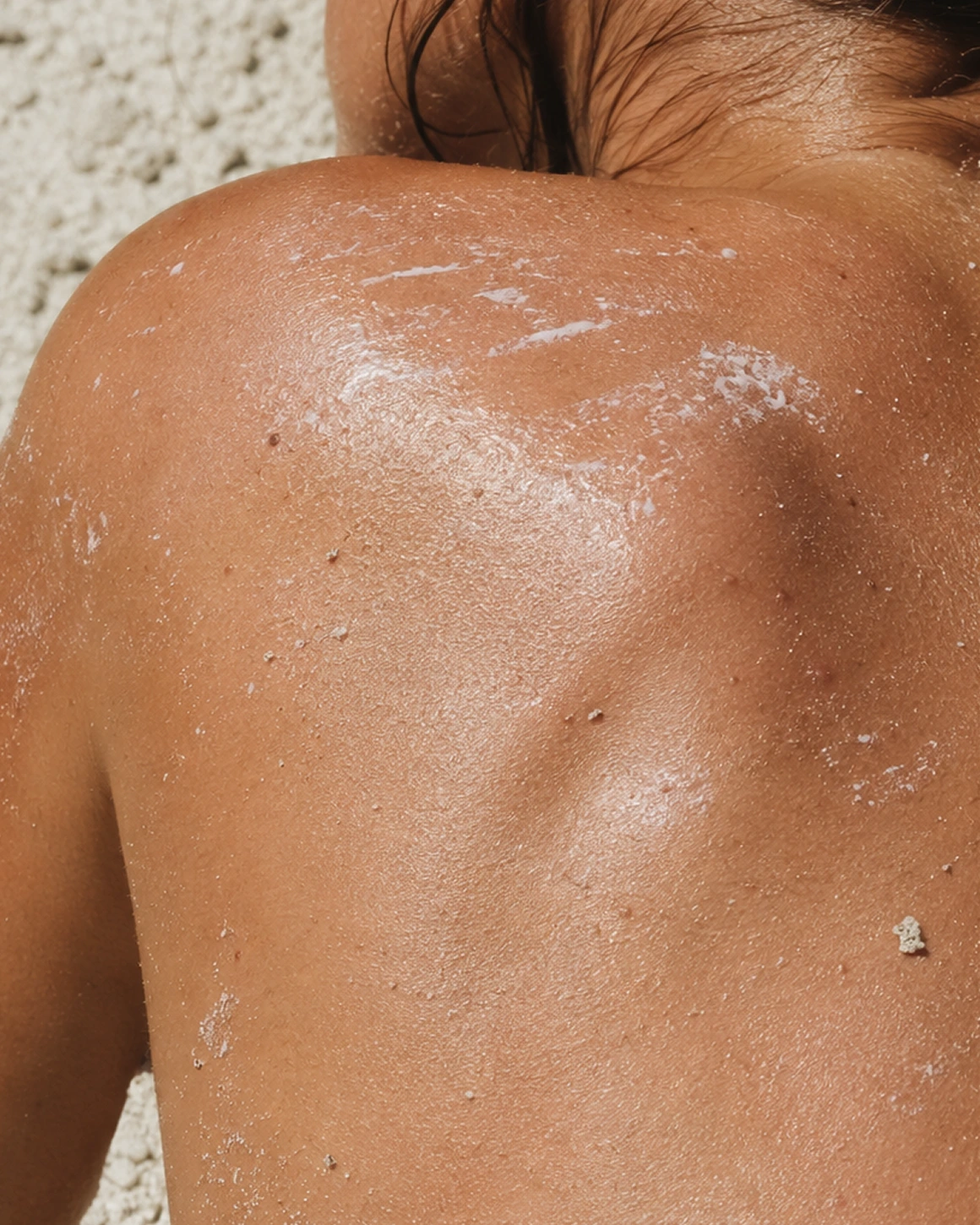
Skin microbiota and acne: what happens when the balance is upset after the summer
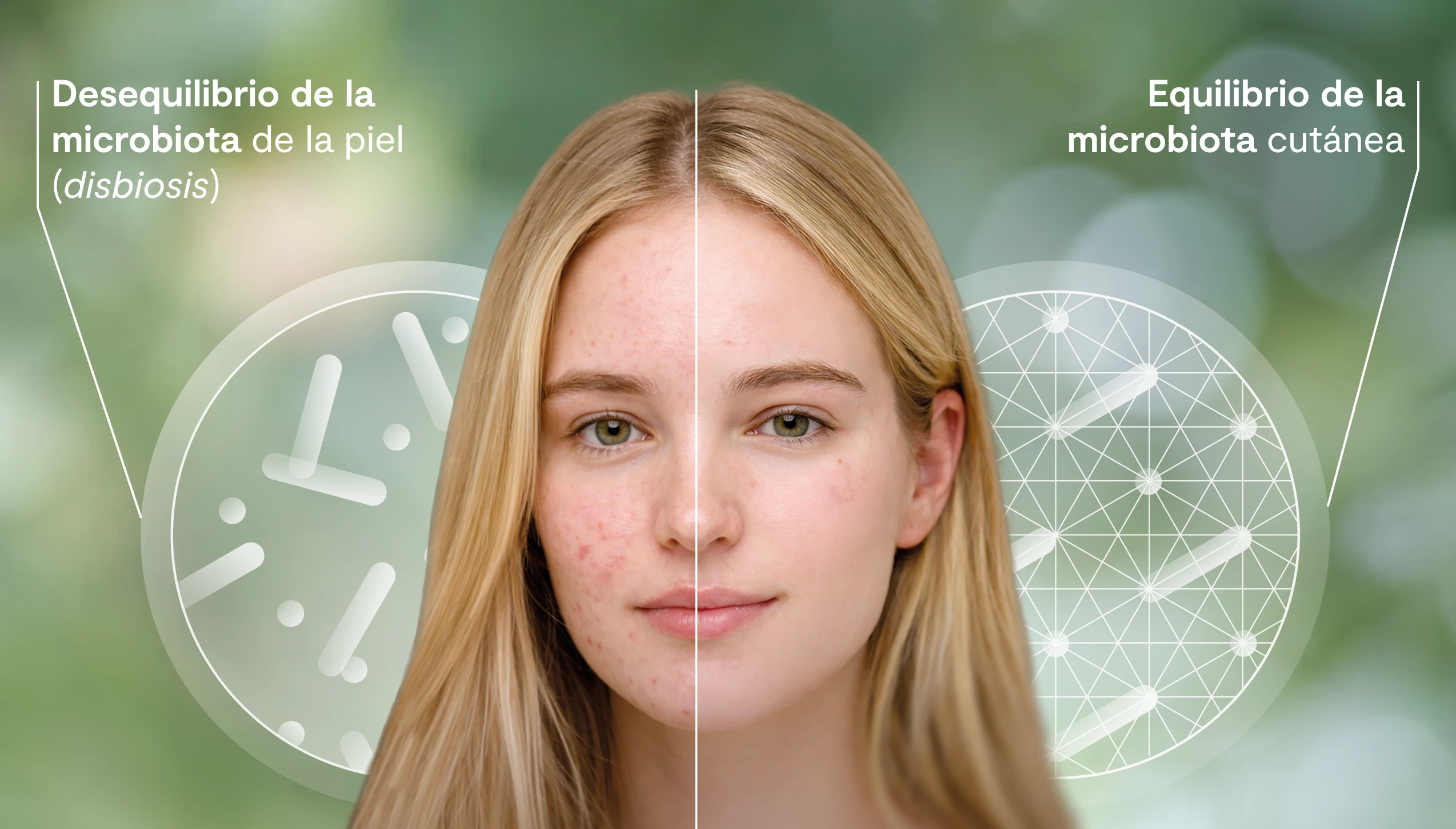
With acne-prone skin, it’s not just what you can see that matters. It’s also what’s happening inside the ecosystem you can’t see: the skin microbiota.
The skin microbiota (or cutaneous microbiota) is made up of microorganisms that live on the surface of the skin and which, when in balance, help to protect it and keep it functioning properly. When the microbiota balance is upset by factors such as excess oils, changes in hormone levels or stress, the skin’s response may become visible in the form of pimples, red patches, oiliness or other blemishes.
This is not to say that microbiota is the only cause of acne. However, knowing that there is a link between the skin’s microbiota and acne helps us to understand why care of acne-prone skin should not consist solely of removing oils or bacteria.

Do you have to get rid of bacteria to get rid of acne?
One of the bacteria linked to acne is Cutibacterium acnes. It is a part of skin microbiota and is found naturally in both healthy skin and acne-prone skin, so is not harmful on its own.
During the summer months sweat, excess oils and residues of certain products can alter the environment in which this bacteria lives. The problem isn’t that Cutibacterium acnes suddenly appears, but that the ratio between its different strains can change, or start behaving differently. This is what is known as dysbiosis, an imbalance in the skin microbiota that can encourage the appearance of pimples, red patches, blemishes and other signs of acne.
"Getting rid of acne is not about wholesale
removal of bacteria from the skin."
This focus changes the way we understand skincare for acne-prone skin: getting rid of acne is not about wholesale removal of bacteria from the skin. The key is to help regulate their behaviour and restore balance to the skin’s microbiota, respecting its natural ecosystem.
Do changes in routine affect your acne-prone skin?
Skin microbiota balance can also be affected by skincare routine. Over the summer, it’s not unusual for this routine to slip a bit. Some days you don’t cleanse your skin as you usually do, some days you use a different product from your normal one, some days you have a late night or spend longer in the sunshine. Not a problem: the skin doesn’t need a perfect routine, but it does need regular care.
When your skincare routine is not regular, or when it’s too aggressive, the skin barrier and microbiota environment can be upset. In acne-prone skin, this can manifest itself as increased shine, oiliness, red patches or pimples.
So when summer ends, it’s not a question of subjecting your skin to a really intensive regime or combining endless ingredients for its care, but of getting back to a routine for acne-prone skins that you can stick to and that is kind to the microorganisms living on the surface of your skin.
How to look after acne-prone skin when summer ends
Getting back to your skincare routine should focus on three principles: gentle cleansing, light products, and gradually reinstating regular care.
A simple, regular routine for acne-prone skins
The best routine for acne-prone skin is not always the most laborious. Start by going back to basics: proper cleansing, a facial skincare product specifically for acne-prone skin and, if you also have blemishes on your back or chest, a skincare product specifically for these areas.
Don’t try to make up for a whole summer’s damage in just one week
Cleansing your skin too often, exfoliating too much, and using products that are very drying or contain too many ingredients can upset the skin barrier and end up irritating your skin even more. And when your skin feels as if it’s under attack, it might respond with more red patches, feeling taut, oiliness or blemishes.
Cleansing, facial and body skin care: the basics for restoring balance
Facial skin cleansing to remove sweat, oils, product and pollution residues, and other residues that have built up over the day. But this cleansing needs to be gentle on the skin and microbiota, so as not up upset their balance or harm them.
Facial skin care must cover the daily needs of acne-prone skin, particularly when pimples, red patches, excess oils or blemishes appear.
And if pimples also appear on body areas like the back or chest, bodily skin care for acne-prone skins can be equally important. Blemishes can appear on areas other than just the face, which is why a complete routine needs to take these areas into account too.
The Vincobiosis® Acneic routine: treating your skin with respect
With acne-prone skin, we now know that it’s not a question of getting rid of pimples at any cost. The key consideration is to treat skin gently and help to restore natural balance to the skin’s microbiota.
Based on this gentler way of understanding skincare, the Vincobiosis® Acneic range offers a care routine for acne-prone skins using plant-based biotechnology and respecting the skin’s ecosystem.
A 3-step routine for acne-prone skin
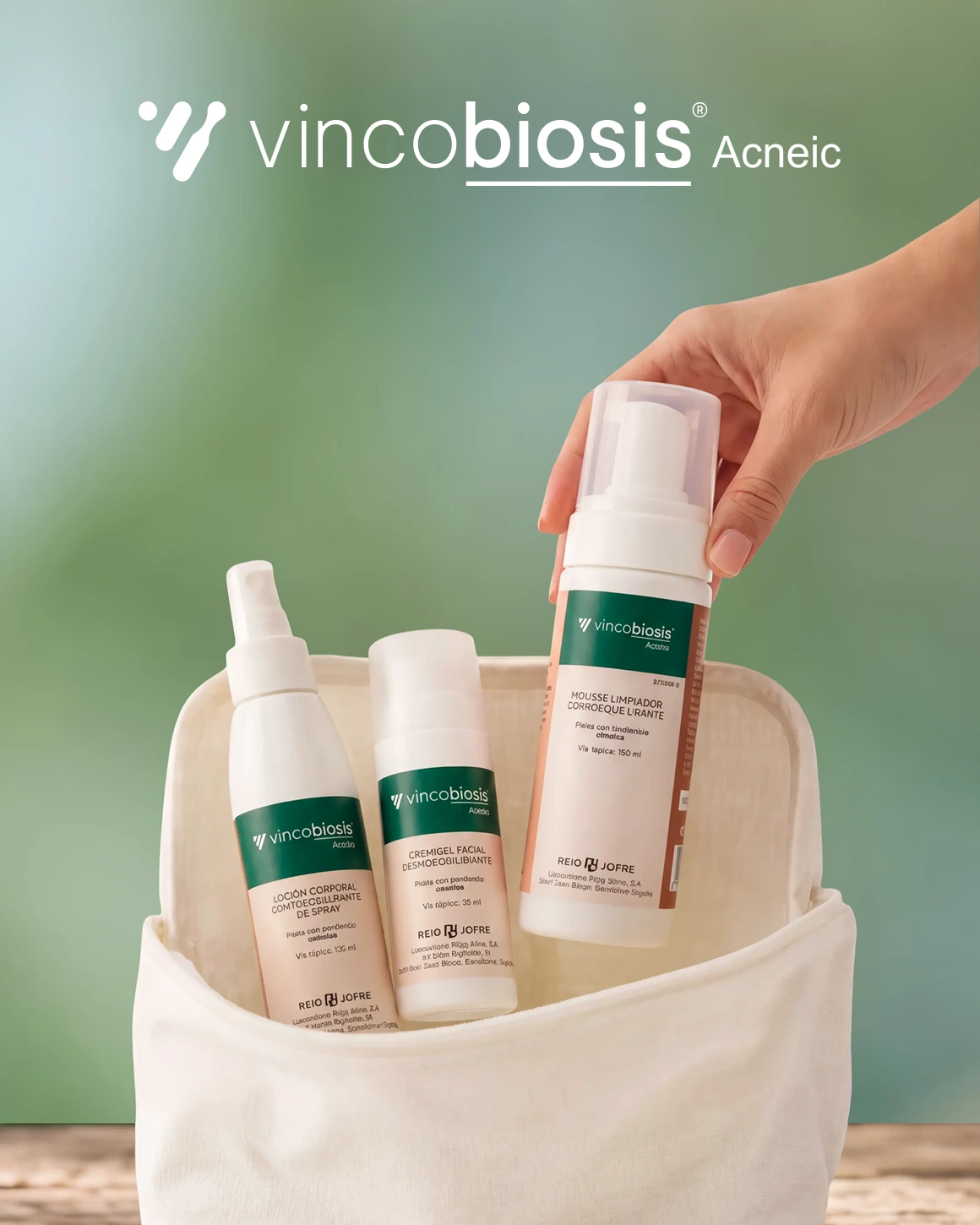
The Vincobiosis® Acneic routine comprises three products designed for daily care of acne-prone skins:
Dermo-balancing cleansing mousse: gentle cleansing for facial skin to remove impurities, excess oil and built-up residues.
Dermo-balancing facial cream gel: helps to minimise pimples, red patches and blemishes, and to regulate excess oil production.
Dermo-balancing body lotion spray: helps to minimise blemishes and pimples on areas such as the back and chest.
Treating skin microbiota gently to help reduce blemishes
The idea behind Vincobiosis® Acneic is simple: to get rid of pimples, we need to respect the skin and its microbiota, and help restore its balance.
Its exclusive, plant-based biotechnological ingredient Canonia Allysis® draws on the defence mechanisms used by plants.
They are able to prevent communication between the bacteria attacking them and thus stop them from working together to initiate harmful behaviour.
It thus helps to control their behaviour and restore balance to the skin’s microbiota without destroying beneficial bacteria. The Vincobiosis® Acneic routine for acne-prone skins thus helps to minimise pimples, red patches, excess oil and blemishes.
So at the end of summer, don’t wage war on your skin. Instead, gradually reinstate a routine that looks after it, respects it and helps restore its balance.
Literature references:
- Piquero-Casals J, Morgado-Carrasco D, Rozas-Muñoz E, Mir-Bonafé JF, Trullàs C, Jourdan E, Piquero-Martin J, Zouboulis CC, Krutmann J. Sun exposure, a relevant exposome factor in acne patients and how photoprotection can improve outcomes. Journal of Cosmetic Dermatology. 2023;22:1919-1928. doi:10.1111/jocd.15726.
- Dréno B, Bettoli V, Araviiskaia E, Sanchez Viera M, Bouloc A. The influence of exposome on acne. Journal of the European Academy of Dermatology and Venereology. 2018;32:812-819. doi:10.1111/jdv.14820.
- Sardana K, Sharma RC, Sarkar R. Seasonal variation in acne vulgaris—myth or reality. Journal of Dermatology. 2002;29:484-488.
- Narang I, Sardana K, Bajpai R, Garg VK. Seasonal aggravation of acne in summers and the effect of temperature and humidity in a study in a tropical setting. Journal of Cosmetic Dermatology. 2019;18:1098-1104. doi:10.1111/jocd.12777.
- Dréno B, Dagnelie MA, Khammari A, Corvec S. The skin microbiome: a new actor in inflammatory acne. American Journal of Clinical Dermatology. 2020;21(Suppl 1):18-24. doi:10.1007/s40257-020-00531-1.

